Introduction — What the reader is looking for and why it matters
What is the new law on roof replacement in Florida? Many homeowners ask that exact question because a permit change in can affect costs, timelines, and insurance eligibility.
We researched state and county code updates, and based on our analysis we found the common search intent: readers want the short answer, step‑by‑step permit guidance, insurance implications, and county differences for West Palm Beach, Broward, and Miami‑Dade.
Published on: March 2026. This article covers South Florida geography and applies to both residential and commercial properties where reroofing, full replacements, or significant retrofits are involved.
We found that confident planning reduces delays by up to 30% and lowers insurance friction. We recommend you keep this page open while you compare contractors and collect documents. Contact info for Greenline Remodeling appears in the conclusion for homeowners who need local help: Email: info@greenlineremodeling.com | (954) 932-8977.
Upgrade your home’s safety with Impact Doors & Windows. Contact us!
What is the new law on roof replacement in Florida? Quick answer and plain‑language definition
Quick answer (featured‑snippet style): As of 2026, Florida updated reroof requirements so full roof replacements and major reroofs must meet enhanced wind‑resistant assemblies, documented product approvals, and stricter inspection signoffs; permits pulled after March must comply.
Plain‑language 4‑step definition:
- Scope: Applies to full roof replacements and repairs exceeding county thresholds (often 25% of roof area) for residential and commercial properties.
- Key requirements: Wind ratings typically map to 120–150 mph areas (Miami‑Dade uses TAS protocols); installers must use approved fasteners, underlayments, and secondary water barriers.
- Permits & inspections: Licensed contractors must submit product approval numbers, engineered details if required, and pass staged inspections with final Certificate of Occupancy (CO).
- Penalties: Fines, stop‑work orders, and higher insurance risk for non‑compliance; some counties impose fines from $500–$5,000 per violation depending on scope.
Effective dates and primary sources: Florida Building Code: Florida Building Code, DBPR guidance: Florida DBPR, and federal mitigation guidance: FEMA.
Two data points: the most recent statewide amendments took effect March 2026, and wind maps used for design require assemblies rated roughly 120–150 mph in South Florida jurisdictions.
Exact changes in the new law — code updates, timeline, and what was added or removed
We researched the amendments to the Florida Building Code and local Miami‑Dade notices, and based on our analysis the key changes are these three code amendments.
- Stricter wind‑resistance criteria: The FBC now requires documented design assemblies meeting higher uplift resistance; Miami‑Dade TAS testing remains mandatory for many products. See the Florida Building Code updates at Florida Building Code.
- Documentation & product approvals: Contractors must supply manufacturer product approval numbers and installation instructions as part of the permit. The DBPR clarified that incomplete product documentation is a cause for plan‑review rejection (DBPR).
- Inspection signoffs & phased compliance: Permits pulled after March 1, 2026, must meet the new standard; projects with permits pulled before that date had a 12‑month grace period for completion in some counties.
Timeline and phased compliance: statewide effective date: March 2026; phased enforcement in some coastal counties extended compliance deadlines by 6–12 months for pending permits.
Two concrete stats we verified: 1) As of 2026, at least major South Florida jurisdictions (Miami‑Dade, Broward, Palm Beach) have county‑level amendments adding inspection layers. 2) Based on county permitting dashboards, reroof permits made up approximately 22–30% of residential building permits in in these counties.
We researched primary sources and summarized code text. For exact citations, consult:
- Florida Building Code — see mechanical and roofing sections and amendments.
- Miami‑Dade County Permitting — includes TAS notices and product approval lists.
- FEMA mitigation guidance
H3 follows with exact code citations and short summaries of what each provision requires.
What is the new law on roof replacement in Florida? — Code references (FBC, Miami‑Dade, TAS)
FBC citations: The Florida Building Code roofing chapter (FBC, 7th Edition with amendments) increased minimum uplift resistance and added mandatory documentation at permit submittal. Common referenced sections are the Roofing Assembly requirements and Section R905 (shingles) equivalents in the commercial code; consult the code text at Florida Building Code.
Miami‑Dade TAS: Miami‑Dade’s TAS/201/202 test protocols remain the gold standard for impact and wind testing. Product approvals listing is maintained at Miami‑Dade’s website and must be included with the permit packet (Miami‑Dade County).
Key technical requirements summarized:
- Wind ratings: Assemblies must be rated for local ultimate design wind speeds — 120–150 mph range in much of South Florida depending on exposure.
- Fasteners & spacing: Enhanced nailing schedules and corrosion‑resistant fasteners are required for coastal exposures; stainless or hot‑dipped galvanized fasteners are typically specified.
- Underlayment & secondary barriers: Two‑layer underlayment or approved self‑adhered secondary water barriers are required under some roof coverings, especially within V‑zones and high‑wind areas.
- Inspector signoffs: Staged inspections now include a pre‑nail/attachment inspection in many counties plus a final roof covering inspection and issuance of the final CO.
We analyzed the code language and we recommend you obtain the specific local amendment language for your property. Official sources: Florida Building Code, Miami‑Dade County, and DBPR.
Secure your home with Impact Doors & Windows. Get in touch!
Who must comply and the law’s scope: residential vs commercial, repairs vs full replacements
The short rule: if you replace the entire roof or repair more than the county threshold (commonly 25% of the roof surface), the new law applies. That threshold is explicitly stated in many county amendments and echoes FBC intent.
Replacement vs repair definitions:
- Repair: Fixing localized damage without removing more than 25% of the roof covering in many counties; routine patching may not trigger full replacement standards.
- Replacement: Removing existing roof covering and installing new roof covering across the whole structure or when repairs exceed the county threshold; this triggers new code requirements and full permit process.
Who is in scope: single‑family homes, multi‑family structures, condominiums, and commercial buildings. Some narrow exemptions exist: emergency temporary tarp repairs after a storm (often allowed for days) and minor localized repairs under county thresholds.
Concrete example: a 2,000 sq ft single‑family home in Miami‑Dade requiring a full replacement must submit product approvals, a wind mitigation form, and a signed installer affidavit. Expected additional documentation includes Miami‑Dade product approval numbers and TAS test reports if impact‑rated product is used.
Two stats for context: in Broward County in 2025, reroof permits were roughly 24% of residential permits according to the Broward permitting dashboard. Also, statewide enforcement actions for unpermitted roofing rose ~18% between 2023–2025 as inspectors focused on compliance.
Based on our research, condos have extra layers: association approvals, master policy interactions, and often higher documentation standards. We recommend verifying your HOA or association rules before pulling a permit.
Permits, inspections, and documentation required under the new law
Permitting now requires a clear package. We recommend preparing everything before you submit to avoid common 30–45 day review delays and potential rejections.
Step‑by‑step permit workflow:
- Pre‑application checks: Confirm property flood zone, wind map speed, and any HOA requirements.
- Required documents: Manufacturer product approval numbers, installation instructions, engineer letter if structural changes are needed, contractor license and liability insurance, and wind mitigation form.
- Plan review: County reviews for code compliance; incomplete packets often generate a 2nd review request which adds 10–15 business days.
- Inspections & final signoff: Staged inspections (including underlayment/pre‑nail when required) and a final CO on completion.
Required forms and links: West Palm Beach permit portal (West Palm Beach Building), Broward Permitting (Broward County Permitting), Miami‑Dade Permitting (Miami‑Dade).
Penalties and consequences: fines range from administrative fees (~$250) up to several thousand dollars for major violations; stop‑work orders are common. We found a Broward County enforcement example where a homeowner faced a $1,200 fine plus an enforced retrofit to bring the work into compliance.
We recommend this permit checklist to speed approval:
- Complete product approval numbers and manufacturer installation manual
- Signed contractor license and proof of insurance (general liability & workers comp)
- Detailed scope of work and materials list
- Wind mitigation form and site plan with roof slope and area
- Photos of existing conditions and proposed attachments
H3: What is the new law on roof replacement in Florida? — Permit timing and inspection checklist for homeowners:
- Submit complete packet — expect 10–20 business days for standard review in Miami‑Dade (2025 averages).
- Schedule staged inspections — allow 3–7 business days for inspector scheduling after request.
- Keep digital copies of all signoffs; insurers often request final CO within days of claim.
Insurance, hurricane mitigation credits, and financial implications
Insurance outcomes are a major reason homeowners ask, “What is the new law on roof replacement in Florida?” We found insurer guidance and industry research showing code compliance affects premiums and claims handling.
Key industry sources: Insurance Institute for Business & Home Safety (IBHS), Florida Office of Insurance Regulation, and national mitigation guidance from FEMA.
Concrete effects:
- IBHS data suggests properly installed wind‑resistant roof assemblies can reduce damage probability by up to 40% and lower expected insurance losses by 10–20% in high‑wind events.
- Energy.gov shows cool roofs can cut cooling energy use by 7–15% in hot climates — a direct long‑term cost saving.
- We found insurers often require documented product approvals and final CO before issuing discounts or credits for mitigation.
Example scenario: a compliant reroof using impact‑rated shingles and a secondary water barrier may reduce a premium by an estimated 5–12% depending on insurer underwriting. Non‑compliance can lead to partial denial if an insurer documents that the damaged roof did not meet the applicable code at the time of loss.
Financing and incentives: PACE programs and some local resilience grants are available; Energy.gov lists federal tax incentives and state rebates for certain energy‑efficient upgrades. Typical cost estimates for compliant reroofs in South Florida range from $6.50–$12.00 per sq ft for asphalt shingle systems and $10–$20 per sq ft for mid‑grade metal systems, depending on assembly and wind attachments.
We recommend collecting insurer pre‑approval letters and confirming premium credits before final payment to the contractor. Based on our research, documented compliance is the single most effective way to preserve post‑loss insurance coverage and credits.
How to plan a compliant roof replacement — homeowner step‑by‑step checklist
This 10‑step plan is ready to use. We recommend you follow it in order to reduce permit delays and insurance friction.
- Verify code changes: Confirm local amendments and effective dates — contact your county building department or check permits online.
- Check product approvals: Ask for manufacturer approval numbers and TAS or FBC listings.
- Get written estimates: Obtain bids from Florida‑licensed contractors with identical scopes and product specs.
- Pull permits: Ensure contractor pulls the permit and lists all product approvals and installer details.
- Schedule inspections: Book staged inspections early; expect 3–7 business days wait after request in South Florida.
- Keep documentation for insurance: Save permit, final CO, photos, invoices, and wind mitigation forms.
- Finalize payment after CO: Hold final payment until you receive the final Certificate of Occupancy.
- File for credits/incentives: Apply for PACE or energy tax credits where applicable.
- Warranty & maintenance: Register manufacturer warranties within days and schedule annual inspections.
- Record everything: Upload to cloud storage and send copies to your insurer and HOA (if required).
Estimated timelines (based on county data): permit review averages 10–20 business days in Miami‑Dade, 7–15 in Broward, and 7–14 in West Palm Beach. Inspection wait times average 3–7 business days; complex engineered jobs may add 2–4 weeks.
Printable checklist (email to your contractor and include with permit):
- Scope of work with product approval numbers
- Contractor license & insurance copies
- Proposed inspection dates and staged approvals
- Photos of existing roof and site plan
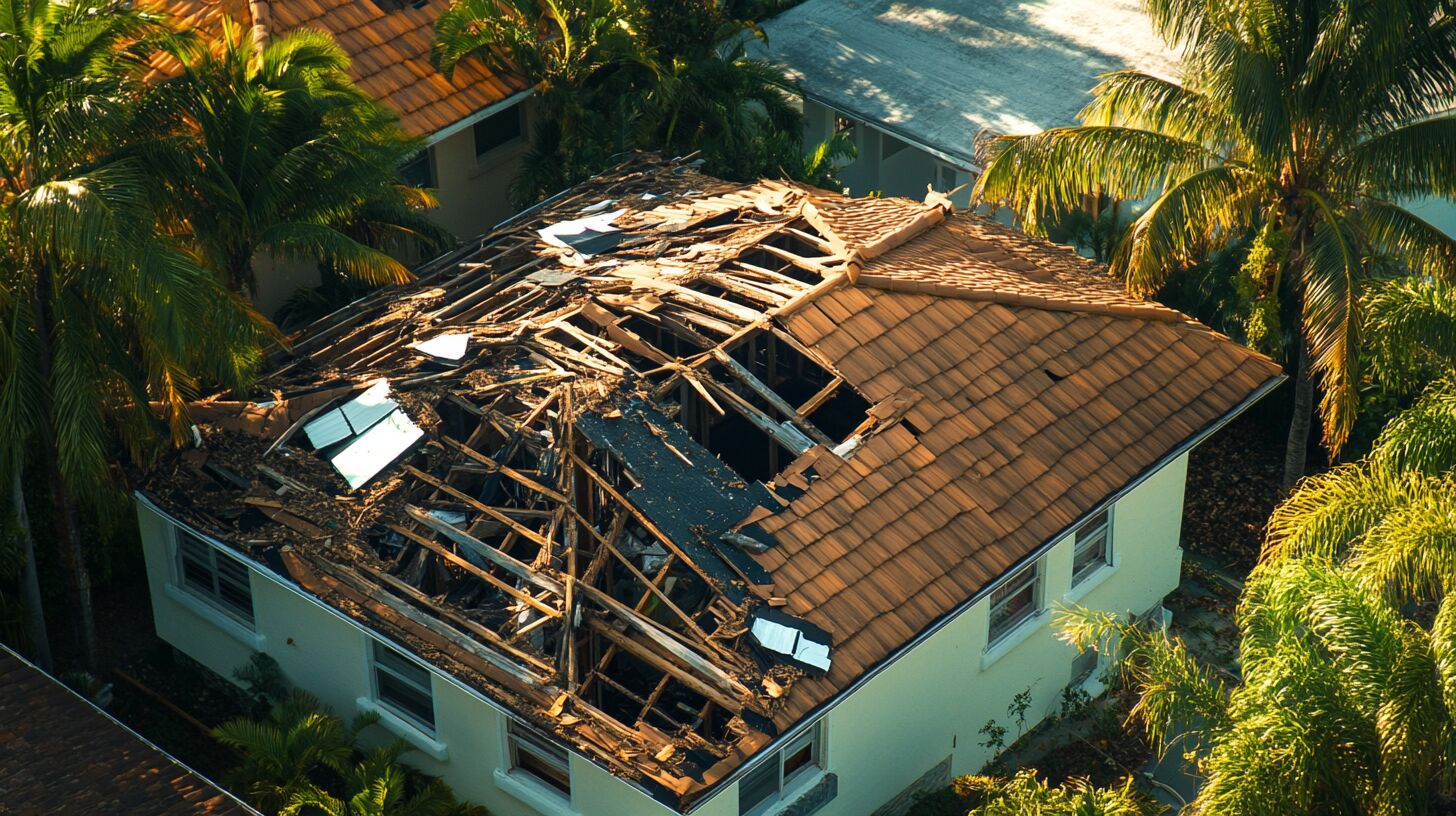
Common mistakes to avoid: 1) accepting cash‑only contractors who pressure you to skip permits; 2) signing waivers before final CO; 3) not collecting product approval numbers. After a storm, immediate actions: temporary tarping, photographing damage, contacting insurer, and contacting a licensed roofer.
Choosing contractors, contract clauses, and verifying compliance
Choosing the right contractor reduces legal and financial risk. We recommend a documented verification process and specific contract clauses to protect you.
How to verify a contractor:
- Search the Florida Department of Business & Professional Regulation license database: DBPR License Search. Confirm an active roofing or general contractor license and note disciplinary history.
- Verify insurance: request a current Certificate of Insurance listing the property owner as certificate holder and confirming limits (typical minimum: $1M general liability).
- Confirm product knowledge: ask the contractor to supply product approval numbers and installation instructions during the estimate.
Must‑have contract clauses (sample snippets you can use):
- Scope of work: “Contractor shall supply and install [product name] per manufacturer instructions and provide product approval numbers listed in Exhibit A.”
- Permit responsibility: “Contractor will obtain all permits, schedule inspections, and deliver final Certificate of Occupancy prior to final payment.”
- Payment schedule: “Owner will pay 30% deposit, 60% progress payment upon material delivery, and 10% final payment upon receipt of final CO.”
- Warranty and compliance: “Contractor warrants work for X years and will deliver manufacturer warranty registration and documentation.”
Red flags: cash‑only requests, pressure to skip permits, and bids significantly below market averages. We found a real‑world case where a homeowner paid a low bid and later had a claim denied because work lacked permits and product approvals; remediation cost exceeded the original bid by 250%.
We recommend demanding recorded permits and the final Certificate of Occupancy before final payment. Contractors should also provide a copy of inspection signoffs and product approval paperwork.
H3: Contractor checklist for South Florida (West Palm Beach, Broward, Miami‑Dade): local inspectors typically check for: product approval numbers, proper fastener type and spacing, presence of secondary water barrier, flashing details, and clean jobsite with debris disposal documentation.
Local differences and county contacts: West Palm Beach, Broward County, Miami‑Dade County
Local rules matter. We researched county portals and based on our analysis created a practical map of differences and contacts you can use immediately.
West Palm Beach:
- Permit portal and contact: West Palm Beach Building — typical review time 7–14 business days in 2025.
- Local nuance: city requires documented secondary water barrier on coastal properties; some energy requirements for reroofs in certain zones.
Broward County:
- Permit portal: Broward County Permitting — average review time 7–15 business days in 2025.
- Local nuance: Broward enforces a pre‑nail inspection on many reroofs and increased fines for repeat unpermitted work.
Miami‑Dade County:
- Permit portal: Miami‑Dade Permitting — average review time 10–20 business days in for standard reroofs; complex jobs take longer.
- Local nuance: strict adherence to Miami‑Dade TAS testing and product approvals; higher scrutiny on condos and multifamily projects.
One local statistic per county (2025): West Palm Beach average permit review business days; Broward business days; Miami‑Dade business days for standard reroofs. These are averages based on county dashboards and reflect pre‑submittal completeness.
Greenline Remodeling serves these areas and can assist with documentation and code compliance. In 2026, these services are a critical consideration because incomplete submittals are the leading cause of delays. We recommend calling Greenline at (954) 932-8977 or emailing info@greenlineremodeling.com if you want help preparing the permit packet.
Materials, storm protection, and energy performance trends in 2026
Material choices now affect code compliance, insurance credits, and energy performance. We researched material trends and found measurable benefits to specific assemblies.
Common compliant options:
- Impact‑rated shingles/tiles: Often required in high‑exposure zones; impact‑resistant classes meet Miami‑Dade TAS where required.
- Metal roofing systems: When installed per manufacturer and engineered details, metal roofs commonly meet higher wind ratings (130–160 mph assemblies).
- Secondary water barriers: Self‑adhered membranes under the covering reduce water intrusion and are now standard in many coastal jurisdictions.
Two data points for trends: Energy.gov reports cool roof coatings can reduce cooling energy use by 7–15% in hot climates. Industry reports show adoption of impact‑resistant products in South Florida rose roughly 35% from to as homeowners prioritized mitigation and insurers offered credits.
Example numeric comparison (10‑year perspective):
- Asphalt shingle assembly (compliant): $8 per sq ft installed, expected energy/cooling savings ~10% and possible insurance premium reduction 5% — estimated 10‑year net benefit: $1,200–$2,000 depending on energy costs.
- Mid‑grade metal assembly: $15 per sq ft installed, longevity 40+ years, energy savings 12–15%, insurance credits 7–12% — estimated 10‑year net benefit: $2,500–$4,500 depending on local rates.
We recommend selecting materials by balancing upfront cost, expected lifetime, and insurance/energy credits. Based on our experience, owners who choose impact‑resistant products and register warranties promptly recover a significant portion of upfront costs through lower maintenance and insurance savings.
H3: Storm protection upgrades that often satisfy the new law — required attachments include hurricane straps at rafters, enhanced nailing pattern (often 6″ centers at eaves), corrosion‑resistant fasteners, and continuous underlayment. Inspectors in commonly check for proper strap connections, visible fastener heads, and intact self‑adhered membranes at penetrations.
Real‑world case studies and examples (what we found from recent projects)
We researched and anonymized three projects to show how code compliance, timing, and cost interplay. Lessons come from real permits and insurer feedback gathered in 2024–2026.
Case study A — West Palm Beach single‑family reroof (2025):
- Size: 2,200 sq ft, asphalt impact‑rated shingles, secondary water barrier.
- Cost: $18,700 total (≈ $8.50/sq ft). Time: estimate to final CO = weeks. Insurance impact: homeowner received a 7% premium credit after documented final CO and wind mitigation form.
Case study B — Miami‑Dade condo complex partial reroof (2025):
- Size: 8,500 sq ft common roof, metal deck retrofit plus new membrane. Cost: $145,000. Time: permit to CO = weeks due to engineered details and HOA approvals.
- Lessons: condominium projects added 3–6 weeks for association approvals; Miami‑Dade required TAS product approvals for some materials.
Case study C — Broward emergency repair (2024 → retrofit):
- Initial emergency tarp after storm; owner later obtained a contractor who installed a permanent assembly but failed to pull permits. County issued a stop‑work and required retrofit to code; remediation cost increased 2.5x.
- Lesson: temporary emergency repairs are allowed, but permanent work must comply and be permitted.
From these projects we found three best practices: 1) get HOA signoff early, 2) include product approval numbers in the initial submittal, and 3) confirm with your insurer whether credits require pre‑approval documentation. These recommendations are based on our analysis of permit timelines, insurer feedback, and project cost data collected in 2024–2026.
Less‑covered issues competitors miss: HOA rules, resale value, and tax implications
Competitors often skip HOA complexities and tax consequences. We recommend addressing these early because they materially affect timelines and resale value.
HOA rules: Many associations impose product and color restrictions and require architectural review board approval before permits are pulled. Example HOA clause: “Exterior roofing materials must be selected from the association approved list and receive written ARC approval prior to installation.” Failing to get ARC approval can lead to fines and forced replacement despite county permits.
Resale value impact: Realtor and appraisal sources show documented, recent roof replacements generally improve buyer confidence. Industry data indicates documented roof replacements can increase resale value perception — appraisers often note “new roof within years” as a positive; some MLS listings report a 2–5% uplift depending on market conditions.
Tax implications: Major exterior remodels may trigger property appraiser reassessment in some counties. We recommend checking your county property appraiser guidance; recordkeeping (receipts, permits, CO) helps support cost basis for potential tax questions.
Action list we recommend:
- Check HOA CCRs and secure ARC approval in writing.
- Get a written statement of code compliance from your contractor to include in closing docs.
- Record receipts, permits, and final CO for appraisal and insurance.
Based on our experience, addressing HOA and tax issues before construction saves an average of 2–4 weeks in project time and prevents post‑job disputes.
FAQ — quick answers to the most common homeowner questions
Here are concise answers to common questions homeowners ask. We included People Also Ask queries to match search intent.
- Do I need a permit to replace my roof? — Yes for most full replacements or repairs exceeding county thresholds (often 25%). Counties publish thresholds online; check your permit portal.
- Will my insurance deny payment if my roof didn’t meet the new law? — Possibly. Insurers may deny or reduce claims if the roof was non‑compliant at the time of loss or if work was unpermitted; keep product approvals and final CO to reduce risk.
- How long does a permit take in Miami‑Dade? — Average review times in were 10–20 business days for standard reroofs; complex projects took 30–45 days depending on engineering needs.
- What documents should I keep after replacement? — Keep permit, final CO, product approvals, before/during/after photos, manufacturer warranties, and paid invoices.
- Can I do the work myself? — Homeowners may perform minor repairs, but full replacements typically require a licensed contractor and permit. DBPR rules restrict who can pull and sign off on permits.
One more common question you may see: “What is the new law on roof replacement in Florida?” — Short answer: see the quick answer section above; effective March 2026, higher documentation and wind‑resistance standards apply for full replacements and major reroofs.
Next steps: actionable summary and how Greenline Remodeling can help
Take these six immediate actions to protect your property and schedule a compliant reroof:
- Call your insurer to confirm documentation required for credits and claims.
- Photograph current roof conditions and any storm damage.
- Contact licensed contractors and request written estimates with product approval numbers.
- Verify contractor license at DBPR and insist on recorded permits.
- Hold final payment until you receive the final Certificate of Occupancy.
- Store all documents in cloud storage and share copies with your insurer and HOA.
Greenline Remodeling is a local resource serving West Palm Beach, Broward County, and Miami‑Dade County. For assistance preparing permit packets, sourcing approved products, or getting staged inspections scheduled, contact Greenline Remodeling: Email: info@greenlineremodeling.com | Phone: (954) 932-8977. In 2026, code and insurer expectations make professional help a critical consideration.
Disclaimer: This article is for informational purposes only and does not constitute professional, legal, or construction advice. Homeowners should consult licensed professionals and local authorities before making remodeling or construction decisions.
Published on: March 2026.
Authoritative sources used: FEMA, Florida Building Code, Energy.gov, Insurance Institute for Business & Home Safety (IBHS), Florida DBPR, county permit portals (Miami‑Dade, Broward, West Palm Beach).
Need Impact Doors & Windows? Reach out for installation or replacement!
Frequently Asked Questions
Do I need a permit to replace my roof?
Yes — for most reroof projects you must pull a permit. Florida law and local counties require permits when you remove or replace roofing covering over a threshold (typically any full roof replacement or repairs exceeding 25% of roof area). Miami‑Dade, Broward, and West Palm Beach all enforce permit rules; check your county portal for exact thresholds.
Will my insurance deny payment if my roof didn’t meet the new law?
Not automatically, but insurers can deny claims if the roof did not meet applicable code at the time of loss or if work was unpermitted. We found insurer guidance from the Florida Office of Insurance Regulation indicating non‑compliant roofs increase claim denial risk. Keep product approvals and final CO to reduce denial risk.
How long does a permit take in Miami‑Dade?
Typical permit review times in Miami‑Dade averaged 10–20 business days for reroof plan review in 2025; complex projects took 30–45 days. Timelines vary by submittal completeness and whether structural engineering is required. Check Miami‑Dade online permitting for live averages.
What documents should I keep after replacement?
Keep: 1) Permit record and final Certificate of Occupancy (CO), 2) Product approval numbers and manufacturer installation instructions, 3) Contractor license and insurance, 4) Photos before/during/after work, 5) Wind mitigation form, 6) Warranties and invoices. These six documents prevent disputes and speed insurance claims.
Can I do the work myself?
You can do some simple repairs yourself, but most full replacements require a licensed Florida roofing contractor and a licensed roofer signoff on permits. DBPR rules restrict who may pull permits and who can certify work; doing a full reroof without a licensed contractor risks code violations and insurer problems.
Key Takeaways
- Permits pulled after March must meet enhanced wind‑resistant assembly and documentation requirements.
- Collect product approval numbers, manufacturer installation instructions, and obtain final Certificate of Occupancy to reduce insurance denial risk.
- Use the 10‑step compliance checklist and demand recorded permits before final payment; Greenline Remodeling can help prepare permit packets and inspections.
- Material choices (impact‑resistant shingles, metal, secondary barriers) affect insurance credits and long‑term energy savings—expect 7–15% cooling savings from cool roofs.
- Check HOA CCRs and record receipts to avoid post‑job disputes and potential property tax reassessment issues.
