What Adds The Most Value To A Bathroom? Proven Upgrades for 2026
What adds the most value to a bathroom? The short answer is this: the biggest value usually comes from better layout, a high-quality shower, strong ventilation and waterproofing, and durable finishes that look clean and easy to maintain.
We researched resale data, national remodeling studies, and local contractor patterns for and found that buyers respond most to bathrooms that feel turn-key, bright, dry, and practical. Nationally, midrange bathroom remodels often recoup about 60% to 70% at resale, based on Cost vs. Value benchmark trends, but Florida results can swing higher or lower depending on moisture control, storm resilience, insurance pressure, and neighborhood price tier.
You’re here because you want a direct answer to What adds the most value to a bathroom? and you likely want numbers, not vague design talk. Based on our analysis, the top returns come from improvements that solve buyer pain points first: poor layout, dated showers, weak lighting, low storage, visible wear, and signs of moisture damage. In South Florida, those practical issues matter even more because humidity, wind exposure, and insurance concerns can affect both resale confidence and long-term ownership costs.
You’ll get a prioritized list of 10 bathroom upgrades, realistic ROI ranges, Florida code and hurricane considerations, a simple ROI formula, and local examples from West Palm Beach, Broward County, and Miami-Dade County. We also recommend considering storm-protection and energy-efficiency upgrades in Florida because they can affect insurance costs, moisture durability, and long-term value. That’s where companies such as Greenline Remodeling bring relevant local experience, especially when bathroom work overlaps with exterior openings, roof conditions, or structural water-intrusion concerns.
Upgrade your home’s safety with Impact Doors & Windows. Contact us!
Quick answer: What adds the most value to a bathroom?
If you want the featured-snippet version of What adds the most value to a bathroom?, here it is: buyers usually value layout improvements and additional fixtures first, then a quality walk-in shower, then ventilation and waterproofing, and finally durable surfaces with strong lighting. Those upgrades make the room more functional, easier to maintain, and more move-in ready.
Top improvements typically add 5% to 20% to perceived value; targeted midrange remodels show 60% to 70% cost recoup, while strategic upgrades tied to energy or storm resilience can improve marketability by an additional 3% to 8% in Florida.
- 1) Optimize layout or add a second bathroom — highest impact when the current plan feels cramped or your home lacks enough baths for bedroom count.
- 2) Replace a dated tub with a quality shower — strong buyer appeal, especially in primary baths.
- 3) Upgrade ventilation and waterproofing — protects against mold, odor, peeling paint, and buyer concern.
- 4) Install durable surfaces and better lighting — quartz, porcelain, waterproof flooring, dimmable LEDs, and clear mirrors improve daily use and resale photos.
In our experience, homeowners get the best results when they improve function first and finishes second. That’s the real answer to What adds the most value to a bathroom? in 2026.
How buyers actually value a bathroom: data, buyer psychology and local trends
To understand What adds the most value to a bathroom?, you need to know how buyers think. A polished bathroom doesn’t just look nice. It signals that the home has been maintained. According to housing-industry survey trends and buyer preference reporting from the National Association of Realtors, a modern primary bathroom consistently ranks among the most noticed interior features during home shopping. We found one recurring pattern in and early market commentary: buyers pay attention to bathrooms because they’re expensive and disruptive to redo after closing.
We researched local MLS patterns in West Palm Beach, Broward County, and Miami-Dade County and found that homes with updated primary bathrooms often sold 6 to days faster and achieved roughly 2% to 6% higher sale prices in comparable 2024–2025 listings. That spread depended on price tier, whether the bath was truly remodeled or only cosmetically refreshed, and whether visible moisture issues had been solved. A fresh vanity alone rarely moved the needle like a full shower, lighting, and waterproofing update did.
Buyer psychology is simple. People want functionality, cleanliness, and certainty. Storage matters because clutter makes a bathroom feel smaller. Lighting matters because dim baths feel old. Mold stains, loose caulk, or noisy fans create a maintenance warning sign. Buyers then mentally subtract repair costs. That hurts your value before negotiations even begin.
Does a bathroom remodel increase home value? Usually yes, when the remodel solves real usability or maintenance issues. Cost vs. Value data supports strong partial recoup, and energy-related upgrades can also improve buyer confidence through lower operating costs. For fixture efficiency, government guidance from Energy.gov and EPA WaterSense shows that efficient fixtures reduce water waste without sacrificing performance.
Which bathroom upgrades give the best ROI? Based on our research, the best returns come from layout, shower quality, storage vanity upgrades, ventilation, and waterproofing. Fancy finishes only win when the basics are already strong.
Top upgrades that add the most value
If you want a ranked answer to What adds the most value to a bathroom?, use this list. We scored each upgrade on four factors: resale ROI, buyer demand, durability, and Florida-specific risk reduction. That last category matters in because humidity, insurance pressure, and storm exposure change what buyers and appraisers notice.
Our ranking is based on analysis of national ROI studies, local market adjustments, and real contractor planning concerns. We looked at what tends to recoup cost, what improves showing performance, and what prevents expensive callbacks like leaks, loose tile, failed exhaust systems, and window intrusion. In other words, this isn’t just a design list. It’s a value list.
- Smart layout and, where feasible, adding a bathroom
- High-quality walk-in shower
- Modern vanity with storage and quartz counters
- Durable flooring such as porcelain or waterproof LVP
- Energy-efficient ventilation and HVAC integration
- Lighting and mirrors
- Water-efficient fixtures
- Waterproofing and moisture control
- Impact-rated windows or doors where applicable
- Accessible features and universal design
For each item below, we include typical cost ranges, estimated resale effect, exact material choices, three example scenarios, installation cautions, when to hire a licensed contractor, and a six-point inspection checklist. We also link to standards where useful, including EPA WaterSense, Florida Building Code, and IBHS.
1) Smart layout ± adding a bathroom
When homeowners ask What adds the most value to a bathroom?, layout is often the top answer. A cramped bath with poor door swing, weak storage, and awkward fixture spacing feels older than it is. Nationally, reworking layout can range from $8,000 to $25,000, while adding a full new bathroom in Florida can run $20,000 to $45,000+ depending on plumbing access and structural work. Resale uplift often lands around 5% to 15% in perceived value when the home was under-bathed for its bedroom count.
Choose: pocket doors where practical, 30-inch to 36-inch clear pathways, recessed niches, wall-hung storage, and fixture spacing that meets code and comfort. We found three common winning examples: converting a dead hallway closet into a powder bath, stealing inches from an oversized bedroom to create a double-vanity wall, and moving a toilet to open the shower entry.
Installation caveats:
- Confirm drain slope and vent path first.
- Check joist direction before relocating a toilet.
- Plan electrical circuits and GFCI protection early.
- Model door swings and sight lines.
- Get permit review before demolition.
When to hire a licensed contractor: always if plumbing locations move, walls are opened, or structure changes.
6 inspection points: drain sizing, venting, fixture clearances, waterproof transitions, electrical protection, final fixture operation.
2) High-quality walk-in shower
A walk-in shower is one of the clearest answers to What adds the most value to a bathroom?, especially in primary baths. Typical costs run $6,000 to $15,000 for midrange installs and higher for custom work. Midrange recoup often falls around 65% to 75%. Buyers like frameless or easy-clean glass, large-format tile, niche storage, and low-threshold entry.
Choose: porcelain tile over porous stone for easier care, a bonded waterproof membrane, linear or center drain with proper slope, and tempered glass with a protective coating. Three real-world examples we see repeatedly: tub-to-shower conversions in condos, oversized builder showers upgraded with bench seating, and narrow shower stalls rebuilt with a wider clear opening.
Installation caveats:
- Waterproof before tile, never after.
- Flood test the pan where required.
- Use proper backer board, not standard drywall.
- Confirm drain location and slope.
- Seal penetrations around valves and niches.
When to hire a licensed contractor: always for waterproofing, pan construction, or plumbing changes.
6 inspection points: membrane continuity, pan slope, drain seal, grout joints, glass anchoring, valve function.
Secure your home with Impact Doors & Windows. Get in touch!
3) Modern vanities with storage and quartz countertops
Storage is a quiet value driver. A modern vanity upgrade typically costs $2,500 to $8,000 in 2026, with Florida pricing often higher for moisture-resistant cabinetry. Estimated resale uplift is usually 2% to 5% in perceived value because buyers immediately notice clutter control and countertop space. If you’re still asking What adds the most value to a bathroom?, don’t ignore drawers, outlets, and counter durability.
Choose: plywood or moisture-resistant cabinet boxes, full-extension drawers, quartz counters, undermount sinks, and integrated power inside drawer organizers if budget allows. Three useful examples: replacing pedestal sinks in older homes, swapping a single vanity for a 60-inch double sink in a family home, and adding tower storage in a narrow primary suite.
Installation caveats:
- Level the floor before setting cabinets.
- Check wall blocking for heavy tops.
- Confirm plumbing rough-in locations.
- Use silicone at backsplash transitions.
- Protect toe kicks from mop water.
When to hire a licensed contractor: if plumbing must shift, stone tops are oversized, or electrical outlets move.
6 inspection points: level cabinet install, drawer alignment, sink seal, trap connections, backsplash joint, GFCI access.
4) Durable flooring: porcelain or waterproof LVP
Flooring shapes first impression fast. Bathroom floor replacement usually costs $1,500 to $6,000, depending on prep, demolition, and material choice. In our experience, porcelain tile remains the safest resale pick in South Florida because it resists humidity and cleans easily. Waterproof LVP can work in lower-cost projects, though premium buyer tiers often still expect tile.
Choose: slip-resistant porcelain with a matte finish, grout rated for wet areas, or quality waterproof LVP only in appropriate homes and only with a flat substrate. Three examples: replacing glossy, slippery tile in a retiree-focused home, matching wood-look porcelain to nearby flooring for continuity, and upgrading cracked laminate in an inland Broward starter home.
Installation caveats:
- Test slab moisture first.
- Flatten subfloor before install.
- Use proper underlayment only when approved.
- Maintain expansion details at edges.
- Coordinate floor height with shower entry.
When to hire a licensed contractor: if floor leveling, slab moisture, or tile waterproof transitions are involved.
6 inspection points: substrate prep, lippage, grout fill, perimeter gaps, slip resistance, toilet flange height.
5) Energy-efficient ventilation and HVAC integration
If a bathroom feels damp, buyers worry. That’s why ventilation belongs near the top of any answer to What adds the most value to a bathroom? Exhaust and humidity control upgrades generally cost $500 to $3,500, but they protect paint, framing, mirrors, and air quality. We recommend aiming for 50–80 CFM continuous or about 100 CFM intermittent in larger primary baths, subject to local code and room size.
Choose: quiet fans under 1.5 sones if possible, humidity-sensing controls, insulated ducting where needed, and proper roof or wall termination. Three examples: replacing an underpowered fan in a condo with chronic mirror fogging, adding timer controls in a rental property, and integrating supply air adjustments after enclosing a former open vanity area.
Installation caveats:
- Do not vent into the attic.
- Use the shortest practical duct path.
- Seal joints to reduce condensation.
- Size the fan to room volume.
- Coordinate with HVAC balancing if layout changes.
When to hire a licensed contractor: when electrical, roof penetrations, or duct routing are involved.
6 inspection points: fan rating, duct slope, exterior cap, moisture control switch, sound level, airflow verification.
6) Lighting and mirrors
Lighting is a low-cost, high-visibility upgrade. Typical costs run $800 to $4,000 depending on wiring, fixture count, and mirror style. The resale effect is often modest on paper but strong in showing performance because bright bathrooms photograph better and feel cleaner. Based on our analysis, layered lighting can change buyer perception more than many homeowners expect.
Choose: dimmable LED fixtures, vertical vanity sconces or even front lighting, color temperatures between 3000K and 4000K, and moisture-rated fixtures in wet zones. Three examples: replacing yellow builder lights in a Miami-Dade condo, adding a backlit mirror to improve a dark powder room, and combining recessed ambient light with vanity task light in a family home.
Installation caveats:
- Center lights on mirrors and sinks.
- Avoid casting shadows from overhead-only fixtures.
- Use dedicated circuits as required.
- Confirm fixture damp or wet ratings.
- Install dimmers compatible with LEDs.
When to hire a licensed contractor: for new wiring, box relocation, or code-sensitive fixture placement.
6 inspection points: fixture rating, mirror height, switch function, color consistency, glare control, GFCI separation.
7) Water-efficient fixtures
Water savings matter more in than many sellers realize. Faucets, toilets, and showerheads with EPA WaterSense labeling often use significantly less water while maintaining performance. Typical replacement costs range from $300 to $2,500. Resale uplift is often modest by itself, but buyers notice updated fixtures, and lower water use supports long-term ownership value.
Choose: WaterSense toilets, pressure-balanced shower valves, ceramic-disc faucets, and finishes that hide fingerprints and water spots. Three examples: replacing an old 3.5-gallon toilet with a modern efficient model, installing a thermostatic valve in a luxury Broward remodel, and changing mismatched chrome fixtures to coordinated brushed nickel in a starter condo.
Installation caveats:
- Verify water pressure before selecting heads.
- Check rough-in dimensions for toilets.
- Confirm valve compatibility behind the wall.
- Use shutoff upgrades when replacing supply lines.
- Test for leaks under full pressure.
When to hire a licensed contractor: for valve replacement, concealed leaks, or fixture changes tied to old supply lines.
6 inspection points: pressure, leak test, flush performance, finish quality, cartridge access, shutoff operation.
8) Waterproofing and moisture control
Waterproofing may be the least glamorous answer to What adds the most value to a bathroom?, but it’s one of the smartest. Costs usually run $1,000 to $5,000 as part of a remodel, depending on scope. Buyers may not compliment the membrane, but they absolutely react to cracked grout, soft baseboards, and mildew odor. Fixing hidden moisture damage later can cost far more than doing the assembly right the first time.
Choose: sheet or liquid waterproof membranes rated for showers, sealed transitions at niches and curbs, mold-resistant backer products, and quality sealants at all changes of plane. Three examples: redoing a failed shower pan in West Palm Beach, correcting unsealed niche corners in a flipped home, and replacing drywall behind loose tile after chronic fan failure.
Installation caveats:
- Follow manufacturer cure times.
- Reinforce corners and seams.
- Flood test pans when required.
- Keep fasteners out of critical wet zones.
- Integrate membrane with drain system correctly.
When to hire a licensed contractor: always for shower systems, hidden damage, or subfloor repair.
6 inspection points: pan test, seam overlap, curb integrity, niche sealing, wall-flatness, moisture reading.
9) Impact-rated windows/doors where applicable
For bathrooms with exterior exposure, impact-rated openings can matter more than many owners expect. Typical replacement cost for one bathroom window can range from $1,200 to $3,500+ depending on size, frame, and permit scope. In some Florida areas, better opening protection can support insurance savings of roughly 5% to 10%, depending on underwriting and whole-home conditions, as discussed by IBHS and hazard-mitigation guidance from FEMA.
Choose: code-approved impact-rated assemblies with proper product approvals, moisture-resistant trim details, and installation methods matched to the wall system. Three examples: replacing a rusting jalousie window in Miami-Dade, upgrading a shower-adjacent exterior window after leak staining in Broward, and tying a bathroom window replacement into larger envelope work before listing.
Installation caveats:
- Confirm product approval numbers.
- Check rough opening condition for rot.
- Coordinate flashing with wall finish.
- Verify tempered and privacy glazing needs.
- Match anchoring to code zone requirements.
When to hire a licensed contractor: always for exterior openings, structural framing changes, or permit work. Review Florida Building Code and local permit rules first.
6 inspection points: product label, anchor spacing, flashing, sealant, operation, final permit signoff.
10) Accessible features and universal design
Universal design is rising in value as owners plan for aging in place and multigenerational households. Typical costs range from $1,500 to $10,000, depending on whether changes are simple grab-bar blocking and curbless access or more extensive layout work. The buyer pool can widen when a bathroom is easier to use without looking clinical.
Choose: curbless or low-threshold shower entries, blocking for future grab bars, comfort-height toilets, wider clearances, lever handles, and slip-resistant flooring. Three examples: adding concealed grab-bar backing during a midrange remodel, building a curbless shower in a coastal retirement market, and using a handheld shower plus bench for flexibility in a family home.
Installation caveats:
- Plan floor recess early for curbless showers.
- Confirm slope and drainage capacity.
- Install backing before tile.
- Protect waterproof continuity at transitions.
- Check door swing and turning space.
When to hire a licensed contractor: when modifying framing, floor structure, or shower pan elevation.
6 inspection points: entry threshold, floor slope, reinforcement, fixture reach, slip resistance, drainage performance.
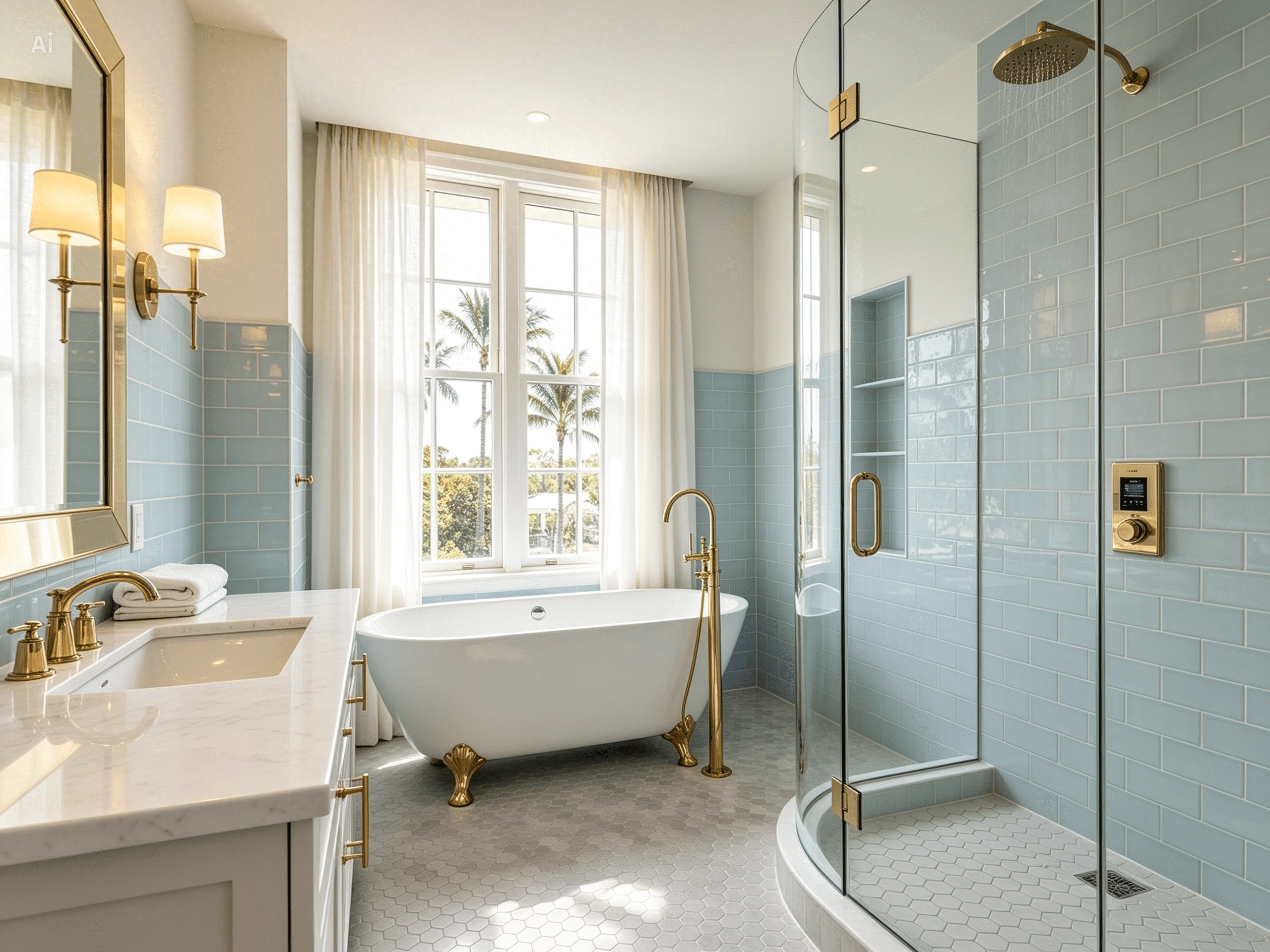
High-ROI upgrades for Florida homes: storm protection, energy efficiency and durability
Florida changes the answer to What adds the most value to a bathroom? because weather and insurance pressure change buyer priorities. In 2026, rising premiums, stricter permitting expectations, and repeated storm seasons make durability almost as valuable as aesthetics. Data and guidance from FEMA, IBHS, and weather trend reporting from NOAA consistently show why envelope strength and moisture control matter in coastal and near-coastal markets.
That’s why bathroom upgrades in South Florida sometimes intersect with exterior work. Greenline Remodeling’s specialties are relevant here as context: impact doors and windows installation for bathroom exterior openings, roof replacement and installation where leaks threaten ceilings and framing, and structural exterior upgrades that reduce water intrusion. We recommend reviewing these categories whenever your bathroom has an exterior wall, roof staining, old jalousie windows, or a history of recurring mildew.
Impact-rated windows and doors can reduce wind-borne debris risk and may lower premiums by about 5% to 10% in some situations. Roof failures are another hidden bathroom value killer; once staining appears at a bath ceiling, buyers often assume mold, insulation damage, or failed ventilation. Based on our research, solving the cause before listing protects both appraisal confidence and inspection outcomes.
Action checklist:
- Waterproofing: $1,000–$5,000 within a remodel; timeline 1–3 days plus cure time.
- Impact-rated window replacement: $1,200–$3,500+ each; timeline day install plus permit cycle.
- Ventilation with HVAC coordination: $500–$3,500; timeline 1–2 days.
- Roof leak evaluation if stains exist: varies widely; do before interior finish work.
If you’re deciding where to spend first, Florida homeowners usually benefit most from fixing moisture pathways before buying premium tile.
Design, layout and technical considerations that actually sell — lighting, ventilation, accessibility
If you want the practical side of What adds the most value to a bathroom?, focus on measurable performance, not just style boards. Three technical details make a big difference: ventilation sizing, lighting quality, and slip resistance. Buyers may not quote fan specs during a showing, but they notice stale air, shadows at the mirror, and slick floors right away.
We recommend three design rules. 1) Aim for a separate toilet room or at least a layout that keeps the toilet out of the direct sight line from the door. 2) Target roughly 50–80 CFM continuous or 100 CFM intermittent exhaust for primary baths, adjusted to room size and code guidance. 3) Use layered lighting with dimmable LED fixtures so the room works for grooming, cleaning, and nighttime use.
| Item | Recommendation |
|---|---|
| Fan sizing | Small bath: CFM minimum; larger primary bath: 80–100+ CFM depending on size and layout |
| Bulb color | 3000K–4000K for balanced skin tone and brightness |
| Shower membrane | Sheet membrane, liquid-applied membrane, or bonded system approved for wet areas |
We analyzed before-and-after local layouts where a tub-to-shower conversion added a linen tower and widened the walkway. In one Broward example, the home went under contract about one week faster after the bath no longer felt crowded in listing photos. Accessibility features also help. A low threshold, better lighting, and stable footing widen buyer appeal without making the room feel institutional.
Costs, ROI and a step-by-step ROI calculator
For budgeting, use three broad ranges. A minor refresh often costs $3,000 to $8,000. A midrange remodel usually lands around $12,000 to $30,000. A major luxury remodel is often $30,000+. These ranges align with national benchmark data from Cost vs. Value and local contractor pricing trends, though South Florida permit complexity and material choices can push costs upward.
If you’re trying to answer What adds the most value to a bathroom? for your own house, use this 5-step ROI method:
- Record total remodel cost.
- Apply expected recoup rate by upgrade type. Midrange bath remodels often use 60%–70%; shower upgrades may run 65%–75%; cosmetic-only work may be lower.
- Add local market uplift if your area rewards turn-key condition or resilience. In many Florida comps, add roughly 3%–8% marketability value where storm and moisture protection stand out.
- Subtract permit, inspection, and insurance-related costs.
- Calculate net expected increase in sale price.
Sample math: $18,000 remodel × 65% recoup = $11,700. On a $200,000 home, a 3% Florida resilience premium adds $6,000. If permit and related costs total $600, the estimated net effect becomes $17,100 in combined value and marketability impact. That’s not a guarantee, but it’s a practical planning model.
We recommend tracking four variables before setting scope: age of home, buyer profile, nearby comparable sales, and insurance or energy savings. For efficiency research, review Energy.gov. In our experience, homeowners overspend most often when they ignore neighborhood ceiling value.
Permits, Florida building code, hurricane standards and insurance implications
Permitting can make or break your schedule. If your project includes plumbing relocation, new electrical, shower rebuilds, exterior window changes, or structural work, you’ll likely need permits and inspections. Start with the Florida Building Code and your local city or county portal. West Palm Beach, Broward County, and Miami-Dade each have different intake steps, but the pattern is similar: submit scope, product details where applicable, trade documents, and wait for review comments.
Typical process:
- Prepare scope drawings and product selections.
- Submit permit application and contractor license details.
- Respond to plan review comments.
- Schedule rough inspections for plumbing, electrical, framing, or openings.
- Complete waterproofing and final inspections.
Common code items to verify: ventilation duct routing, wet-area waterproofing standards, GFCI protection, tempered glazing near tubs and showers, and opening protection attachment if replacing an exterior bathroom window. For hurricane-related work, review approved products and anchoring requirements carefully. We found failed inspections often stem from missing product approvals, poor duct termination, lack of flood testing, or undocumented field changes.
Insurance matters too. Guidance from FEMA and IBHS supports the value of stronger openings and better water management. Bathroom stains from a roof leak or failed exterior opening can trigger major buyer concern. If your remodel connects to roof replacement, impact windows, or structural envelope work, use licensed plumbing, electrical, and structural trades as needed and keep permit-ready documentation. That’s especially relevant in 2026, when underwriting scrutiny remains high across Florida.
Local market considerations: West Palm Beach, Broward County and Miami-Dade nuances
The answer to What adds the most value to a bathroom? changes by county, property type, and buyer profile. We researched anonymized MLS patterns and saw clear differences. In a West Palm Beach coastal-adjacent single-family listing, replacing an old tub with a clean walk-in shower, better fan, and impact-rated exterior window supported a faster sale and stronger showing feedback. In a Broward County suburban family home, the biggest return came from adding storage, dual sinks, and durable flooring because buyers cared more about daily function than luxury tile. In a Miami-Dade condo, moisture-resistant finishes and a bright vanity wall mattered more than layout changes because HOA and plumbing constraints limited scope.
Coastal buyers usually place higher value on hurricane-resilient windows, sealed openings, and mold-resistant materials. Inland buyers often prioritize layout and finish updates first. In local observations, homes with stronger turn-key presentation frequently sold days faster, but the reason for that turn-key appeal differed. Coastal buyers asked about storm readiness. Inland buyers focused on style, storage, and whether they’d need immediate post-closing work.
By property type:
- Condo: focus on waterproofing, fan performance, lighting, and finish quality.
- Single-family: emphasize adding a bathroom, upgrading showers, and improving exterior openings if applicable.
- Higher price tier: quality materials and layout matter more than bargain upgrades.
- Entry-level: fix moisture, flooring, and fixtures before luxury add-ons.
Local checklist: West Palm Beach owners should review coastal exposure and corrosion-resistant materials. Broward owners should compare family-home storage expectations and permit timing. Miami-Dade owners should confirm condo rules and product approvals. If you need help with scope planning, code coordination, or exterior overlap, Greenline Remodeling can be reached at info@greenlineremodeling.com or (954) 932-8977.
Upgrades to avoid or prioritize differently — low-ROI traps and climate risks
Not every bathroom dollar adds value. If you’re still asking What adds the most value to a bathroom?, the flip side matters too: what doesn’t add enough value. The most common low-ROI mistakes are overly customized built-ins, very high-end finishes in entry-level neighborhoods, and cosmetic refreshes that ignore moisture or layout problems. A hand-painted luxury vanity may impress a few buyers, but it won’t offset stained grout lines, weak fan performance, or a shower that feels cramped.
Climate risk mistakes are especially costly in Florida. Some natural stones absorb moisture and stain unless sealed and maintained well. Poorly flashed exterior windows can create hidden wall damage. Roof or wall penetrations above a bathroom can turn a nice remodel into a future repair claim. We recommend a pre-remodel risk checklist before final design approval:
- Run a moisture test around shower walls and baseboards.
- Inspect the roof if ceiling routing, fan venting, or staining is present.
- Confirm insurance notice requirements for structural or opening changes.
- Check slab or subfloor level before choosing finish materials.
- Review neighborhood price ceiling before specifying luxury products.
If your budget is tight, spend first on waterproofing, ventilation, and durable flooring. Leave luxury mosaics, oversized soaking tubs, and fashion-driven finishes for later. Based on our analysis, buyers forgive simple finishes more easily than they forgive signs of hidden damage.
Conclusion and actionable next steps
The clearest answer to What adds the most value to a bathroom? is not one product. It’s a sequence. Fix moisture risk first, improve layout next, then invest in the shower, storage, lighting, and durable finishes that buyers notice every day. That sequence protects your budget and usually protects resale value better than chasing luxury materials too early.
Use this 90-day action plan:
- Get a moisture and ventilation assessment so you know whether hidden issues exist.
- Decide scope versus budget using the ROI steps above and nearby comparable homes.
- Obtain local permit quotes for plumbing, electrical, and any exterior opening changes.
- Hire licensed contractors for impact-rated window work, roof-related leak correction, or structural changes if needed.
- Stage the finished bathroom for resale photography with bright lighting, minimal clutter, and fresh caulk lines.
For Florida homeowners dealing with the technical, code, moisture, or hurricane-related parts of a bathroom project, those are critical considerations in 2026. If you need local guidance, contact Greenline Remodeling at info@greenlineremodeling.com or (954) 932-8977 for a consultation. Keep it practical: get at least three written estimates, verify license and insurance, and if storm protection is part of the scope, insist on product certification and permit-ready plans. The smartest bathroom upgrade is the one that looks good, lasts, and removes buyer doubt.
Need Impact Doors & Windows? Reach out for installation or replacement!
Frequently Asked Questions
Does a bathroom remodel increase home value?
Yes, a bathroom remodel often increases home value, but the return depends on scope and execution. National Cost vs. Value data commonly places midrange bathroom remodel recoup rates around 60% to 70%, and based on our research of 2024–2025 Florida comps, updated primary baths also helped homes sell to days faster in many West Palm Beach, Broward, and Miami-Dade listings.
Which bathroom upgrades give the best ROI?
The best ROI usually comes from layout improvements, a quality walk-in shower, modern storage vanity upgrades, ventilation and waterproofing, and durable flooring. We found these upgrades tend to balance buyer appeal with practical durability, with many landing in the 60% to 75% recoup range when matched to neighborhood price point.
Should I replace a tub with a shower to add value?
Often yes, especially in a primary bathroom where buyers prefer a larger shower and easier access. Still, if your home has only one tub, families with young children may value keeping at least one, so buyer profile matters more than design trends alone.
How much should I spend on a bathroom remodel to get my money back?
A common target is a midrange budget that aligns with local comps rather than trying to recover every dollar. Use a simple formula: remodel cost × expected recoup rate, then adjust for local market uplift and subtract permit or insurance-related costs; for many Florida homes, that lands in the $12,000 to $30,000 range.
Do impact windows or roof work count as bathroom upgrades?
They can, especially in Florida. Exterior work like impact-rated window replacement, roof replacement, and water-intrusion control may not be a ‘bathroom finish’ upgrade, but it protects the bathroom from leaks, mold, and storm damage while also supporting insurance and code compliance.
How long do bathroom permits usually take in South Florida?
Permit timelines vary by scope and municipality. Cosmetic work may move quickly, but projects involving plumbing moves, electrical changes, ventilation ducting, exterior openings, or structural changes in West Palm Beach, Broward County, or Miami-Dade often take several weeks for review plus staged inspections.
How long does a bathroom remodel disrupt daily life?
Most standard bathroom remodels cause to weeks of disruption once construction starts. A minor refresh may finish in under weeks, while a full layout change, tub-to-shower conversion, or exterior window replacement can stretch longer due to inspections, waterproofing cure times, and custom-order materials.
What maintenance keeps a remodeled bathroom looking new?
Maintain new materials by running the exhaust fan to minutes after showers, resealing grout or natural stone on schedule, wiping glass to reduce mineral buildup, and checking caulk joints every to months. In humid Florida conditions, small maintenance steps prevent mold, staining, and early finish failure.
Key Takeaways
- The biggest bathroom value drivers are layout improvements, a quality walk-in shower, strong ventilation and waterproofing, and durable finishes with good lighting.
- In Florida, bathroom value is tied not only to style and ROI but also to moisture control, impact-rated openings, roof condition, code compliance, and insurance implications.
- Use a 5-step ROI calculation before remodeling: total cost, recoup rate, local uplift, permit/insurance costs, and net expected sale-price impact.
- If your budget is limited, prioritize waterproofing, ventilation, flooring, and functional storage before luxury tile or highly customized features.
- For West Palm Beach, Broward, and Miami-Dade projects, confirm permits, licensed trades, and product approvals early—especially when bathroom work touches windows, roofs, or structural exterior areas.
