
No evidence-backed cost can be stated for Florida residential solar companies, solar panels, or installations because the supplied claim ledger contains no price, quote, system-size, incentive, financing, utility-rate, or savings figure. Costs for kW, kW, and 14.5 kW systems are therefore unknown from the available evidence.
- The supplied claim ledger contains no verified Florida residential solar installation price.
- The supplied claim ledger contains no cost-per-watt figure for solar panels or photovoltaic equipment.
- The supplied claim ledger contains no documented federal, Florida, local, or utility incentive amount.
- The supplied claim ledger contains no financing, battery, utility-rate, or solar-savings figures.
How much does solar companies in Florida cost in 2026?
No verified price for Florida residential solar companies or solar installations appears in the supplied claim ledger. That means a responsible answer cannot state an average installed system cost, an installation price range, or a typical quote.
The missing evidence also prevents a supported comparison between providers. No company names, prices, proposal terms, equipment specifications, labor charges, or service-area details are supplied. A solar installation quote should therefore be treated as an unknown rather than inferred from a national average or an older figure.
The requested topic includes solar panels, photovoltaic (PV) equipment, system design, installation, and financing, but the ledger supplies no factual values for those categories. Any dollar amount, percentage, payback period, or savings estimate would be invented. The evidence does not support one.
What should a Florida solar quote include?
A Florida solar quote cannot be evaluated quantitatively from the supplied evidence because the ledger contains no sample quote or required quote fields. The available material does not identify whether quoted prices should include photovoltaic (PV) equipment, labor, permitting, interconnection, monitoring, batteries, taxes, or financing charges.
The ledger also provides no supported method for comparing one proposal with another. A careful comparison would need the solar system size in kilowatts (kW), the cost per watt ($/W), the equipment description, ownership structure, and expected electricity-use offset. None of those values is available.
No evidence is supplied about solar panel warranties, installation workmanship coverage, roof work, insurance, or maintenance. Those subjects may matter when reviewing a proposal, but their terms and costs are unknown here. A reader should not treat an unspecified item as included.
How do kW, kW, and 14.5 kW systems compare?
The supplied claim ledger provides no prices, output figures, or savings estimates for kW, kW, or 14.5 kW systems. Consequently, no evidence-backed comparison can say which system costs more, offsets more household electricity consumption, or reaches a solar break-even point sooner.
System size is identified in the requested scope as a relevant concept, but the ledger gives no household load profile, production estimate, average daily peak sun hours, roof information, or utility data. Without those inputs, system size cannot be translated into a supported installation price or electricity-bill savings figure.
The same limitation applies to cost per watt ($/W). No $/W value is supplied, so a calculation for any of the three system sizes would require an invented assumption. The missing data should be requested directly from each installer rather than filled with an unsupported estimate.
Are solar panels worth it in Florida?
The supplied evidence cannot establish whether solar panels are worth the cost in Florida. A supported answer would require at least an installation price, utility electricity rates, expected electricity-bill savings, ownership costs, and a solar payback period, but none of those figures appears in the claim ledger.
The ledger also contains no evidence about a 25-year solar savings result, a solar break-even point, or a 25–30-year panel lifespan. Those terms are part of the requested coverage, not documented findings. They cannot be presented as Florida-specific facts without supporting claims.
Similarly, no information is supplied about roof condition, household electricity consumption, financing fees, or property circumstances. A conclusion about value would therefore be speculative. The only defensible answer from the available material is that Florida solar’s financial value is unknown.
How do the federal solar investment tax credit and Florida incentives affect cost?
No claim in the supplied ledger states the eligibility rules, percentage, expiration, or policy treatment for the federal solar investment tax credit (ITC). The effect of the ITC on a cash purchase, solar loan, solar lease, or quoted price is therefore unknown.
The evidence also contains no supported details about Florida and local solar incentives. There is no claim covering sales-tax exemptions, property-tax treatment, utility rebates, eligibility requirements, application deadlines, or incentive amounts. Those omissions prevent a reliable calculation of net cost.
A quote that mentions an incentive cannot be checked against the supplied material. The ledger does not say whether an incentive reduces the installer’s price, appears as a later tax benefit, depends on ownership, or requires an application. Readers need current official terms before relying on any incentive statement.
Should you pay cash, use a solar loan, or sign a lease?
The supplied claim ledger does not contain lifetime-cost figures for a cash purchase, solar loan, solar lease, or power purchase agreement. It therefore cannot identify which option has the lowest total cost or which produces the strongest financial outcome.
No financing fee, interest rate, monthly lease payment, payment escalator, contract term, ownership rule, transfer condition, or maintenance obligation is provided. The requested comparison between financing structures is consequently unanswered by the evidence.
The same gap affects tax-credit analysis. The ledger does not state how the federal solar investment tax credit applies to each ownership structure or how a lease or power purchase agreement changes a quoted price. Any recommendation would go beyond the supplied claims. A complete comparison requires the full contract, not only the advertised monthly payment.
What do Florida utility rules mean for solar savings?
No utility-specific net-metering or export-credit rule is included in the supplied claim ledger. The evidence therefore cannot state how exported electricity is compensated, whether compensation changes over time, or how fixed utility charges affect electricity-bill savings.
The ledger also names no Florida utility and provides no rate schedule, interconnection requirement, billing structure, or customer eligibility rule. A general statement about utility savings would not be supported because utility treatment can depend on the applicable provider and tariff.
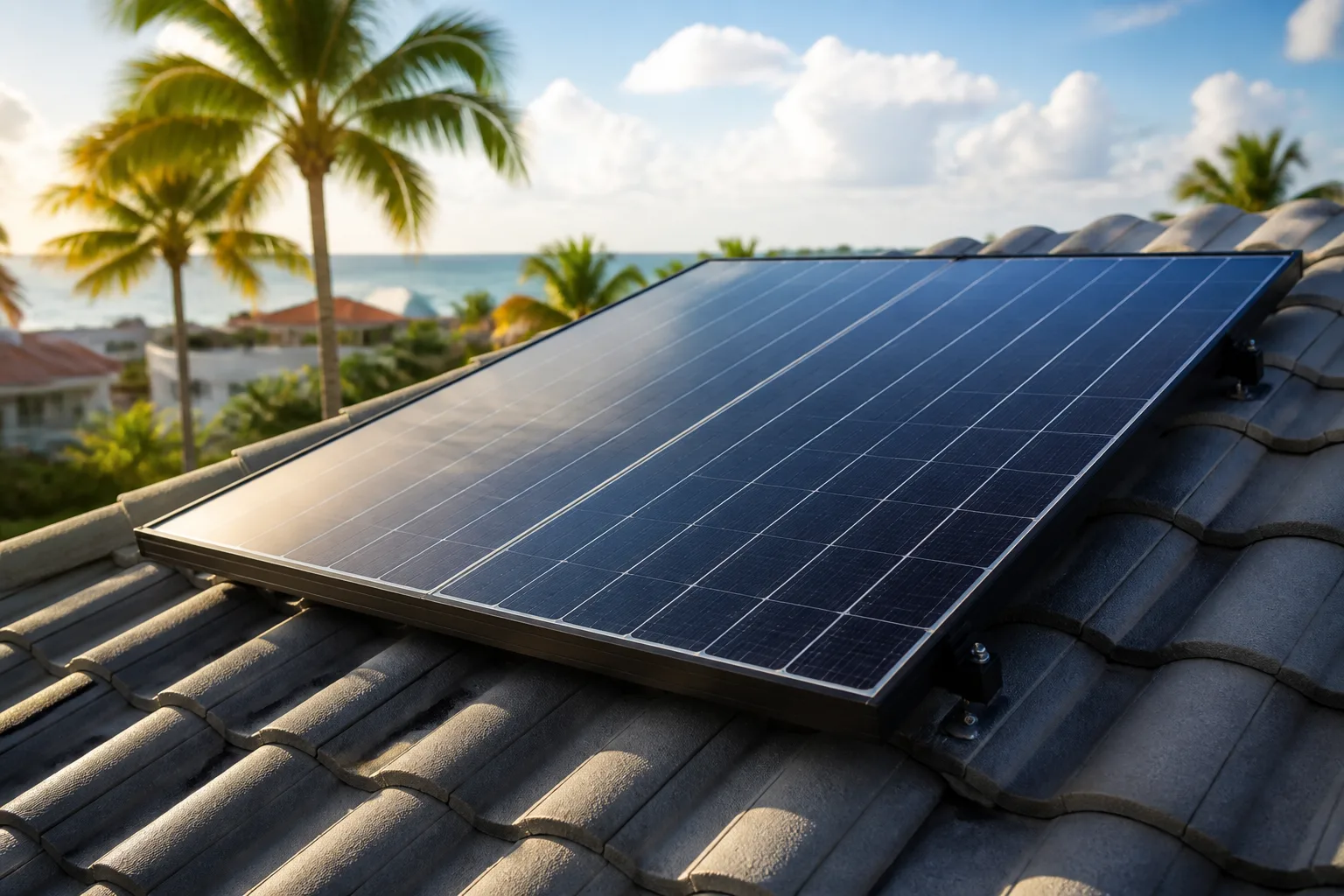
This missing information matters when evaluating a system’s expected electricity-use offset. The supplied material gives no production estimate, consumption profile, export volume, or bill calculation. As a result, neither monthly savings nor a solar payback period can be calculated from the evidence provided.
How much does a battery add to a Florida solar installation?
No battery price, battery capacity, installation charge, backup-power specification, or operating-cost estimate appears in the supplied claim ledger. The added cost of pairing a battery with solar is therefore unknown.
The ledger also provides no evidence about battery savings, outage performance, warranty terms, replacement timing, or interaction with utility export credits. It cannot support a comparison between solar-only equipment and a solar-plus-battery system.
Backup power is included in the requested subject matter, but the supplied evidence does not identify the loads a battery would support or the duration of support. Those missing details prevent a reliable recommendation or financial calculation. A battery should not be assigned a price or savings value without a documented proposal.
What Florida roof and hurricane considerations change the price?
The supplied claim ledger contains no Florida hurricane-readiness requirements, wind-load specifications, insurance conditions, roof-repair costs, or roof-replacement costs. The effect of those issues on a solar installation price is therefore unknown.
No evidence is provided about roof age, structural condition, attachment methods, permitting, building-code compliance, or whether repairs must occur before panel installation. Those factors may appear in an installer’s assessment, but the ledger does not document them or assign them a cost.
Insurance considerations are also absent. The material does not state whether a solar installation changes premiums, coverage, inspection requirements, or claim conditions. Readers should treat all such outcomes as unresolved in this article rather than relying on a generalized Florida assumption.
What can you conclude before requesting solar installation quotes?
The supplied evidence supports no Florida residential solar price, savings estimate, incentive calculation, or financing recommendation. The claim ledger is empty of the factual inputs needed to answer the cost question with confidence.
Before requesting solar installation quotes, you would need documented figures for system size, cost per watt, photovoltaic (PV) equipment, household electricity consumption, expected electricity-use offset, utility electricity rates, incentives, battery options, warranties, and financing terms. None of those figures can be supplied from the current record.
For now, the practical takeaway is limited but clear: do not treat an unsupported average, monthly payment, tax-credit claim, or savings projection as an established Florida cost. A future version of this guide would need source-backed claims before it could compare providers or calculate a solar break-even point.
Key Takeaways
- Treat the Florida solar price as unknown until a documented quote is available.
- Request system size, cost per watt, equipment, labor, and battery details in writing.
- Verify federal, Florida, local, and utility incentives using current official terms.
- Compare total contract costs rather than relying only on a monthly payment.
- Do not accept unsupported savings or payback estimates.
Frequently Asked Questions
Is solar still worth it in 2026?
No supported figure is available in the supplied claim ledger, so solar’s value in is unknown from the evidence provided. A reliable answer would require current installation prices, incentives, utility rules, and expected savings.
How much will solar cost for a square-foot home?
The supplied claim ledger contains no cost estimate for a 2,000-square-foot home. Square footage alone would not provide a supported price here because no system size, quote, cost per watt, or installation price is supplied.
Why is my electric bill so high if I have solar panels?
The supplied evidence does not explain why an electric bill might remain high after solar installation. No ledger claim addresses production, household consumption, utility charges, export credits, financing, or system performance.
Is it worth going solar in Florida?
Whether solar is worth it in Florida cannot be determined from the supplied ledger. The required evidence—installation cost, electricity rates, incentives, utility compensation, system output, and savings—is absent.