
Florida solar panel installation has no supported cost figure in the supplied evidence, so an average price cannot be stated for the requested period. The ledger also contains no verified number for a typical system, incentive reduction, financing payment, payback period, timeline, or lifetime savings. No specific installer or local programme can be identified from that ledger.
- The supplied claim ledger contains no supported Florida solar installation cost figure.
- No verified federal, state, or local solar incentive amount appears in the supplied claim ledger.
- No supported Florida solar financing terms, payback period, or lifetime-savings estimate appears in the supplied claim ledger.
- No supported installation timeline, payment schedule, maintenance cost, or weather-risk budget appears in the supplied claim ledger.
What is the average installed cost of solar panels in Florida?
Florida solar installation has no supported average price in the supplied claim ledger. The available material contains no verified cost per watt, no price for a typical residential system, and no system-size figures for the requested comparison.
That gap means you shouldn’t treat an estimated price as an evidence-based Florida average. A useful comparison would require at least a supported installed price, system capacity, equipment scope, labour assumptions, and location. None of those figures is supplied here.
The ledger also doesn’t identify a published price for any particular Florida city, county, installer, panel package, or installation date. A reliable answer about the requested period is therefore unavailable from the evidence provided. The same limitation applies to any attempt to calculate a 5-kilowatt or 10-kilowatt system price.
How much can incentives reduce the cost?
Florida solar incentives have no supported dollar value or percentage in the supplied claim ledger. The evidence doesn’t establish an amount for a federal tax credit, a Florida rebate, a tax exemption, a utility programme, or a local incentive.
Because no incentive amounts are documented, the net cost after incentives cannot be calculated. The ledger also provides no eligibility rules, treatment of tax liability, application deadlines, programme limits, or distinction between an incentive claimed by a homeowner and one assigned to a financing provider.
Homeowners should regard any quoted reduction as unverified against this evidence until the relevant government, utility, or programme documentation is reviewed. No supported estimate can be given for how incentives would change a Florida residential solar price.
What changes a Florida solar quote?
Florida solar quote drivers have no supported specifications or price effects in the supplied claim ledger. The evidence doesn’t show how system size, monocrystalline panels, polycrystalline panels, string inverters, or microinverters change a quote.
Roof characteristics are also undocumented. No supported information describes roof age, pitch, material, condition, obstruction, shading, structural work, storm-protection requirements, or the effect of any of those factors on installation cost.
The ledger supplies no comparison of equipment warranties, production assumptions, labour requirements, or design constraints. As a result, it isn’t possible to rank the listed equipment choices by price or state a typical premium for one option over another. Any Florida-specific pricing guidance on these variables would need additional evidence.
What additional costs should homeowners expect?
Florida solar add-on costs have no supported dollar ranges in the supplied claim ledger. The evidence doesn’t provide figures for permits, inspections, utility interconnection, sales tax, roof repairs, installation labour, or other soft and hard costs.
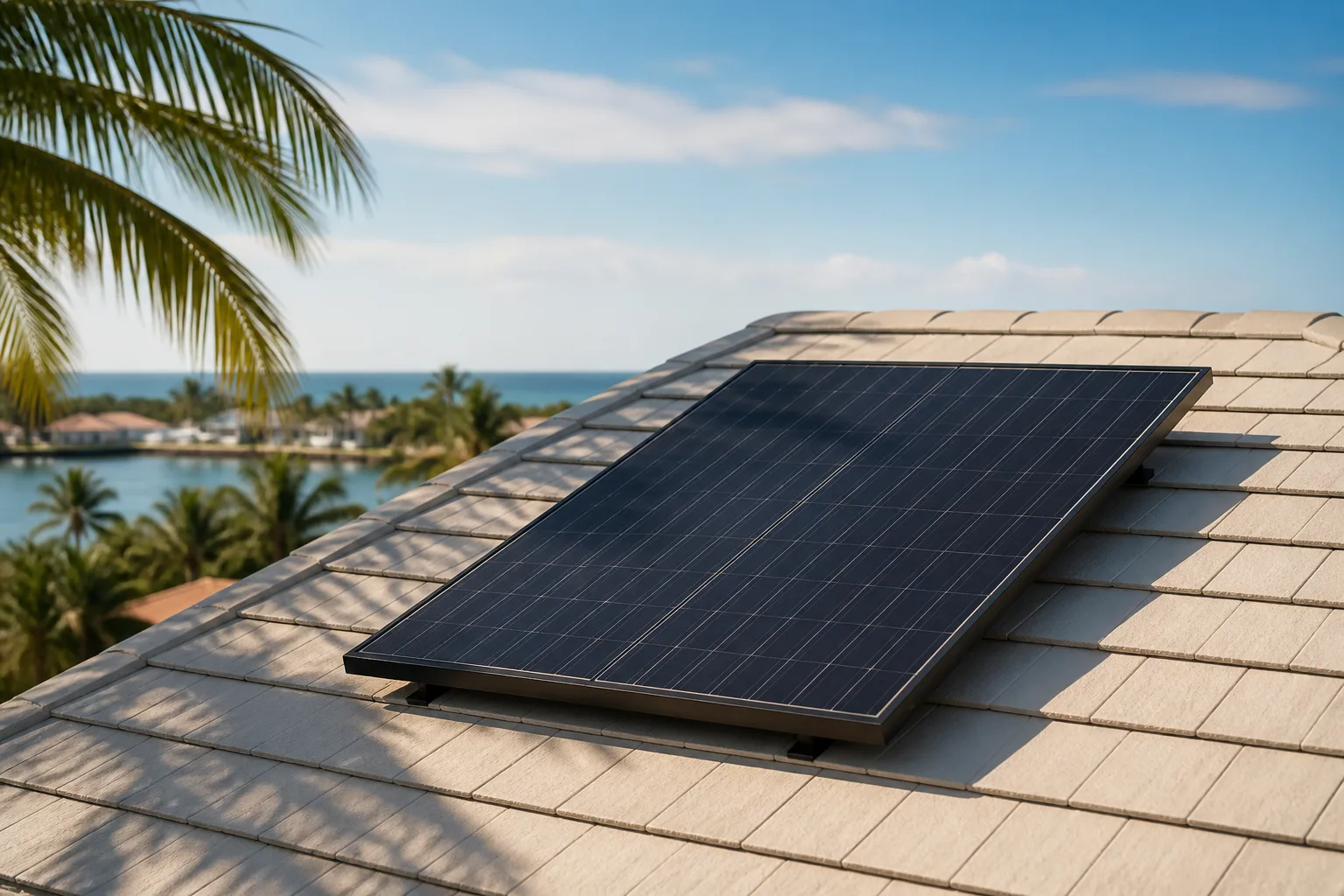
No itemised example shows whether those costs are included in an advertised solar price or billed separately. The ledger also doesn’t identify a Florida authority, utility, county, or municipality whose fee schedule could support a local estimate.
Roof repairs require particular care in any quote review, but the available evidence doesn’t establish when repairs are needed or what they cost. A homeowner can ask for an itemised proposal, yet this article cannot supply a verified usual range. All requested additional-cost figures remain unknown.
Which solar financing option costs least?
Florida solar financing costs cannot be compared from the supplied claim ledger. The evidence contains no terms for a cash purchase, solar loan, lease, or power-purchase agreement.
Without a principal, interest rate, contract duration, escalation terms, upfront payment, monthly payment, buyout provision, or total repayment, no option can be identified as the least expensive. The ledger also provides no supported comparison of ownership, maintenance responsibility, tax treatment, or transfer obligations.
A financing decision needs more than a monthly figure. You would need the complete contract and a like-for-like total-cost calculation. Because none of those inputs is documented here, any claim about the cheapest option, required deposit, monthly cost, or lifetime payment would be unsupported.
How long does Florida solar take to pay for itself?
Florida solar payback and lifetime savings have no supported figures in the supplied claim ledger. The evidence doesn’t provide an electricity rate, annual production estimate, system price, incentive amount, financing cost, export-credit value, or operating expense.
Those missing inputs prevent a defensible payback calculation. The ledger also contains no supported degradation rate, expected service life, replacement allowance, or estimate of future electricity-price changes.
No Florida-specific savings model can therefore be presented. A claim about a typical payback period or lifetime savings would require assumptions that aren’t in the evidence. The requested financial outcome remains unknown rather than a number that can responsibly be inferred.
How does solar installation work in Florida?
Florida solar installation steps and payment milestones are not documented in the supplied claim ledger. The evidence doesn’t establish a verified sequence for assessment, design, permitting, inspection, utility interconnection, installation, or commissioning.
No expected timeline is provided for any stage. Payment timing is also unknown: the ledger doesn’t say whether money is due at contract signing, design approval, equipment delivery, installation, inspection, interconnection, or project completion.
The material contains no supported local process for any Florida county or utility. It also doesn’t identify requirements for a particular property type, installer, or jurisdiction. A homeowner should obtain the process and payment schedule directly from the responsible licensed parties and authorities, because this evidence cannot supply them.
What ongoing solar costs and risks should homeowners budget for?
Florida solar maintenance, replacement, degradation, and weather-risk figures have no support in the supplied claim ledger. The evidence provides no maintenance schedule, service cost, inverter replacement cost, battery replacement cost, performance-degradation rate, or lifetime budget.
Hurricanes, salt spray, and shading are named considerations in the requested outline, but the ledger supplies no supported probability, damage cost, mitigation requirement, performance effect, or insurance treatment for any of them.
Accordingly, no evidence-based reserve can be calculated. The material also doesn’t establish whether a particular component, roof condition, warranty, or installation standard changes the risk. Any budget for ongoing ownership would need documented equipment, property, insurance, and local-condition assumptions that are absent here.
Key takeaways for evaluating a Florida solar quote
Florida solar cost evaluation cannot be completed from the supplied claim ledger because the ledger contains no supported price, incentive, financing, payback, timeline, maintenance, or risk figures.
- No average installed cost per watt is available.
- No verified 5-kilowatt or 10-kilowatt system price is available.
- No federal, state, or local incentive amount is available.
- No financing terms or total-payment comparison is available.
- No maintenance, replacement, degradation, or weather-risk budget is available.
These are evidence gaps, not estimates. A trustworthy published answer would need additional documented claims before it could state numbers or compare Florida-specific options.
Key Takeaways
- Treat the requested Florida solar prices as unavailable rather than estimating them.
- Do not infer incentive savings without documented programme terms and eligibility rules.
- Require itemised financing, installation, and ownership costs before comparing options.
- Obtain additional verified evidence before publishing Florida-specific figures or recommendations.
Frequently Asked Questions
What is the average installed cost of solar panels in Florida?
No supported average installed cost per watt or typical system price appears in the supplied claim ledger. A Florida-specific figure therefore cannot be stated reliably.
How much can incentives reduce the cost?
The supplied claim ledger contains no verified federal, state, or local incentive amounts, including no supported federal ITC figure or Florida rebate and tax-exemption amounts.
How long does Florida solar take to pay for itself?
The ledger provides no supported payback period, lifetime-savings estimate, electricity-rate figure, or Florida-specific financial model for residential solar.